The Fifteenth of September Two Thousand and Eleven. Thursday.
Today I had a 90 minute commute to work as I went to Hull to cover a shift at Paragon station. It's all very modern - the ticket office there shares a hall with the bus operators as Paragon is now a bus/rail interchange. My shift started at 11 o'clock so I didn't have too busy a day. It turned out to be a pleasant change of pace.
I've a lot of time for Hull. I visited Amazing Fantasy today, an independent comic shop on Anlaby Road just across from the station. It's well stocked, with plenty of recent issues and graphic novels and is well worth a visit if you're a comicky person (like me).
I picked up my copy of the new Ultimate Comics Spider-Man from there today. Back in June I blogged about the death of Spider-Man. Well, this is the comic that begins the story of his replacement.
The number of phone boxes in the modern world is diminishing, but you can still see examples of Hull's unique cream boxes dotted about the city.
.
The last time I went out for a drink in Hull with my erstwhile wife she asked a couple of police officers on the beat where was a good, quiet place to go. After a second's bemusement (it was clear the officers were more used to worrying about the noisier parts of town) the officer we were talking to gave us a walking escort across town
We aren't too far from the Humber Bridge, once the longest single span suspension bridge in the world, now the fifth.
What fascinates me is how the Humber was crossed before the bridge was completed. It wasn't that long ago - just 1981 - when the bridge was opened. Up until then there was a ferry that ran from the Corporation Pier in the city -
- over to New Holland Pier on the Lincolnshire side where you could join the train to Grimsby and Cleethorpes:
As I left to catch my train back to Scarborough I bumped into poet Philip Larkin as he was off for his train.
I picked up my souvenir t-shirt.
And watched the sunset as I waited on the platform.
Au revoir, Hull.
More soonliest.
Welcome, Intraloper, to the blog (otherwise the amber-shifted VR timecode for a portal to Hades II) of Vincent Marsden Hendrick, daydream navvy and insinceritist. Here, compressing unfeasible rage, I'll precipitate a meandrous downpour of wet thinking for the unparapluied.
Showing posts with label Ultimate Spider-Man. Show all posts
Friday
Thursday
Not a Hoax, Not an Imaginary Story
The Twenty-Third of June Two Thousand and Eleven. Thursday.
This blog starts on York station and will probably make its way back to Scarborough before it's done. I don't think my poor head could manage another 2 o'clock finish so this one's coming to you on the move.
Spider-man is dead.
Don't worry, not the real Spider-Man. You see, back in 2000 (a phrase that still makes my tiny space age brain spin) Marvel comics came up with a new line of comics that started some of their best known characters - such as Spidey and the X Men - from scratch. They called this line of comics Ultimate Marvel and Ultimate Spider-Man was the first title to be launched (and the collection of those superb first few issues is my Third Comic Book Recommendation). (Wait a minute - I haven't made a Second Comic Book Recommendation. Well, it was suppose to be Grant Morrison's Batman Inc. So there you go)
The idea was that a streamlined history - this world would deliberately not feature more than 4 or 5 titles at any time - would be more accessible to new readers. As time passed though, this version of the Marvel universe began to get almost as complex in its own right. Indeed, the recent run of Marvel movies has based much of its background on Ultimate Marvel. In a case of art imitating life imitating life artist Bryan Hitch based the likeness of the Ultimate Nick Fury, head of superspy agency S.H.I.E.L.D., on Samuel L Jackson.
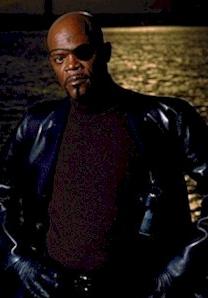
When it came to Fury's cameo appearance at the end of Iron Man who did they cast but...
Ultimate Spider-Man has just reached its 160th issue, with each of those written by one man: Brian Michael Bendis. The first 111 were drawn by Mark Bagley, his collaboration with Bendis being the longest on a Marvel title, outstripping Stan Lee and Jack Kirby's 105 issue run that kick started the Fantastic Four. It's a substantial body of work. And in that latest issue Peter Parker dies fighting the Green Goblin.
I've dipped in and out of Ultimate Spider-Man over the years (I used to subscribe to the UK reprint edition that was available in newsagents here) and I've bought this latest issue today. It's excellent, totally true to the characters Bendis has written for this last decade while underlining the Ultimate universe's raison d'ĂȘtre - things can happen here that wouldn't happen in the regular (Alan Moore called it Earth 616 in a Marvel UK story back in the 80s, of all places, and the handle stuck) Marvel universe.
So does that mean it doesn't count? Or to put it another way is one story more real than another?
Certainly the regular comics Spider-Man is to all intents and purposes the same character that first appeared nearly 50 years ago. (In contrast with DC characters that are regularly rebooted. Heck, they're rebooting their whole line in September - everything back to No1 ). Except he hasn't aged but the world around him has. Why should he 'count' more then when he's clearly as fictional as Ultimate, or Movie, or Cartoon Spider-Man? (An interesting version of this is Grant Morrison's run on Batman these last few years. His take is that everything we have seen in the 70+ years of Batman, from the hard-boiled stories of the 40s, through the wacky 'bam!' 'pow!' adventures of the 60s, to the grim vigilante stuff of the 90s, all took place but over the last 15 years or so of Bruce Wayne's life. Everything counts.)
Followers of Sherlock Holmes consider the stories of Conan Doyle 'canon' even though inconsistencies within them make them no more real than those by other authors. Only certain Star Wars spin offs are considered as true additions to that saga. So clearly it does matter if a story is 'real'. Fiction or not, we feel cheated if we're told something we've invested in didn't happen (I'm thinking Bobby Ewing in the shower in Dallas here, perhaps the most famous example of the 'it was all a dream' cop out). If we say to an author 'I know this isn't real but I'll play along as if it is' the last thing we want is a 'yah-boo, fooled you' betrayal in return.
So when does an honest, non-cheating alternative version count? Well that's easy- when it's good. In long-running narratives like comics or popular characters if something made an impression, or was just plain cool, in a 'what if?' story it quite often turns up in the 'official' version eventually. Villains from the superb 90s Batman cartoon - such as Harley Quinn - moved over to the comics and Chloe from TV's Smallville made it to the paper and ink Metropolis.
So does Ultimate Spider-Man's death count?
It's good enough to.
More soonliest.
(ps Ha! They've just showed Stewie Kills Lois and Lois Kills Stewie episodes on BBC3. What are the chances?)
This blog starts on York station and will probably make its way back to Scarborough before it's done. I don't think my poor head could manage another 2 o'clock finish so this one's coming to you on the move.
Spider-man is dead.
Don't worry, not the real Spider-Man. You see, back in 2000 (a phrase that still makes my tiny space age brain spin) Marvel comics came up with a new line of comics that started some of their best known characters - such as Spidey and the X Men - from scratch. They called this line of comics Ultimate Marvel and Ultimate Spider-Man was the first title to be launched (and the collection of those superb first few issues is my Third Comic Book Recommendation). (Wait a minute - I haven't made a Second Comic Book Recommendation. Well, it was suppose to be Grant Morrison's Batman Inc. So there you go)
The idea was that a streamlined history - this world would deliberately not feature more than 4 or 5 titles at any time - would be more accessible to new readers. As time passed though, this version of the Marvel universe began to get almost as complex in its own right. Indeed, the recent run of Marvel movies has based much of its background on Ultimate Marvel. In a case of art imitating life imitating life artist Bryan Hitch based the likeness of the Ultimate Nick Fury, head of superspy agency S.H.I.E.L.D., on Samuel L Jackson.
When it came to Fury's cameo appearance at the end of Iron Man who did they cast but...
Ultimate Spider-Man has just reached its 160th issue, with each of those written by one man: Brian Michael Bendis. The first 111 were drawn by Mark Bagley, his collaboration with Bendis being the longest on a Marvel title, outstripping Stan Lee and Jack Kirby's 105 issue run that kick started the Fantastic Four. It's a substantial body of work. And in that latest issue Peter Parker dies fighting the Green Goblin.
I've dipped in and out of Ultimate Spider-Man over the years (I used to subscribe to the UK reprint edition that was available in newsagents here) and I've bought this latest issue today. It's excellent, totally true to the characters Bendis has written for this last decade while underlining the Ultimate universe's raison d'ĂȘtre - things can happen here that wouldn't happen in the regular (Alan Moore called it Earth 616 in a Marvel UK story back in the 80s, of all places, and the handle stuck) Marvel universe.
So does that mean it doesn't count? Or to put it another way is one story more real than another?
Certainly the regular comics Spider-Man is to all intents and purposes the same character that first appeared nearly 50 years ago. (In contrast with DC characters that are regularly rebooted. Heck, they're rebooting their whole line in September - everything back to No1 ). Except he hasn't aged but the world around him has. Why should he 'count' more then when he's clearly as fictional as Ultimate, or Movie, or Cartoon Spider-Man? (An interesting version of this is Grant Morrison's run on Batman these last few years. His take is that everything we have seen in the 70+ years of Batman, from the hard-boiled stories of the 40s, through the wacky 'bam!' 'pow!' adventures of the 60s, to the grim vigilante stuff of the 90s, all took place but over the last 15 years or so of Bruce Wayne's life. Everything counts.)
Followers of Sherlock Holmes consider the stories of Conan Doyle 'canon' even though inconsistencies within them make them no more real than those by other authors. Only certain Star Wars spin offs are considered as true additions to that saga. So clearly it does matter if a story is 'real'. Fiction or not, we feel cheated if we're told something we've invested in didn't happen (I'm thinking Bobby Ewing in the shower in Dallas here, perhaps the most famous example of the 'it was all a dream' cop out). If we say to an author 'I know this isn't real but I'll play along as if it is' the last thing we want is a 'yah-boo, fooled you' betrayal in return.
So when does an honest, non-cheating alternative version count? Well that's easy- when it's good. In long-running narratives like comics or popular characters if something made an impression, or was just plain cool, in a 'what if?' story it quite often turns up in the 'official' version eventually. Villains from the superb 90s Batman cartoon - such as Harley Quinn - moved over to the comics and Chloe from TV's Smallville made it to the paper and ink Metropolis.
So does Ultimate Spider-Man's death count?
It's good enough to.
More soonliest.
(ps Ha! They've just showed Stewie Kills Lois and Lois Kills Stewie episodes on BBC3. What are the chances?)
Subscribe to:
Posts (Atom)